Drones
A drone is a compact, electric flying object also known as an Unmanned Aerial Vehicle (UAV). Drones are transportation devices with physical dimensions of 322 × 242 × 84 mm (length, width, height) typically. Most models have a small, light, and maneuverable design. Drones are ideal for reaching locations that are difficult to get to with other transportation means. Drones operate as controlled flights that are remotely piloted by people, the best drones are those that are capable of some degree of automatic navigation if necessary. An effective drone system consists of a land-based remote controller, a deployable aerial vehicle, and a connection that establishes a communication channel between them.
Drone Basics
With drone aerodynamics, we need to consider several forces that affect the movement of the flight. The principles of flight are a set of parameters that determine the probability for the success of an aircraft to become 'airborne'. The thrust, drag, lift and weight are important considerations for all aircraft in general. The thrust is a force generated by an aircraft's propellers as a propulsive force that pushes a flight forward, powered by a turbine engine or an electric motor in the case of a drone.
The drag is the force in the opposite direction of thrust which fundamentally limits the performance of the aircraft. The lift actively contrasts the drag force as an upward force that is created by the wings as air flows around them for keeping the aircraft in the air. Weight is the downward force that pushes towards the surface of the ground and takes advantage of natural gravitational force. When an aircraft is maintaining its heading, altitude, and airspeed, it is said to be in straight-and-level un-accelerated flight. When in this mode the thrust is equal to the drag and the lift is equivalent to the weight resulting in a stagnant airborne vehicle.
Like the propeller of a helicopter, a rotor is the part of the drone responsible for movement and control. Each rotor's ability to rotate comes from magnetic fields which produce a torque around its axis allowing for the significant motion of the drone. Flying a drone in fast winds is dangerous and so is flying in rain, storms, or fog; fog reduces the visibility for drones equipped with the first-person view (FPV). The electronic components inside a drone are reactive to liquids which can damage them. Strong winds will cause a loss of control of movement.
Generally, if the wind speed is higher than 43 kilometers per hour, it is not ideal for a drone. The best weather for drone flying is when the sun is somewhat visible with no signs or forecasts of rain (temperatures of 24 °C and above). Cold temperatures are known to make batteries lose power more quicker than usual. The fastest drone speed ever recorded reached 262 Kph by the DRL Racer X which was recorded by the Guinness Book of World Records. Whereas, consumer drones are limited to a maximum speed of 64 Kph.
Drone flight physics
The movement of a drone is described by three terms which are yaw, roll, and pitch. Except for the fixed-wing and single-rotor drones, a drone has four rotors, divided into two sets. The first set is capable of rotating clockwise while the other is capable of revolving in a counter-clockwise direction. A drone's controller usually looks similar to a video game pad; the left analog stick works as the throttle which if moved up will make the drone elevate and vice versa. The first thing a drone must do is get off the ground, known as being 'airborne. It must use all four of its rotors simultaneously to get a lift off the ground, by generating a net force upwards that is greater than its weight.
The left stick is also responsible for yaw. To yaw is the ability of an aircraft to revolve in an angular motion shifting from the direction that it is initially facing. When pushed to the left, two of the propellers spin faster in a clockwise direction, if moved to the right, the rotors rotate in the anti-clockwise direction. The right analog stick is for the pitch of the drone; this is the drone’s ability to tilt forward to move ahead and also backward to reverse. When the right analog stick is pushed upwards, the two front rotors will spin faster to make the drone’s nose tilt and face down moving the aircraft forward. Pushing the right analog stick down causes the rear rotors to spin and tilts the drone backward to reverse it. Also, pushing the right analog stick left or right makes the drone roll. Rolling is when the drone leans in the left or right direction to turn the aircraft.
Drone Capabilities
Drones can be controlled with a remote by people or by artificial intelligence. Most commonly, drones are useful for aerial photography and video capture. Drones can have the first-person view, which is when the pilot can see everything that the drone is capturing in real-time during its flight by establishing a remote connection to a smartphone or other screen.
Types Of UAVs
Fixed-Wing Hybrid VTOL (Vertical Take-off and Landing)

This type of drone has rotors that point upwards and are capable of a tilt and swivel for take-off/landing. If the rotors of the drone point horizontally, this results in a forward movement. The price data of hybrid drones remain unpublished to acquire due to their limited number in supply. However, they have the potential to be the most expensive type of drone because of their variety of capabilities.
Single Rotor drone

A single-rotor drone has only one rotor and in some cases will include a tail rotor for controlling heading movement. The single-rotor drone looks very similar in structure to a helicopter. The single-rotor drone can draw its power from a gas motor for longer endurance. The single-rotor spins very slowly because it is large, resulting in more energy efficiency. The minimal number of rotors adds up to less energy consumption. They are ideal for heavy payload while having a longer endurance and fast-forward flight; they can carry heavy objects while airborne.
Single-rotor drones are not very stable when landing and need an expert to operate them for a successful landing. The mechanical complexity of a single-rotor drone comes with a requirement for constant maintenance and care. The result is that the single-rotor drone is the more expensive option of drones with price ranges of $25 to $300K USD.
Multi-rotor drone

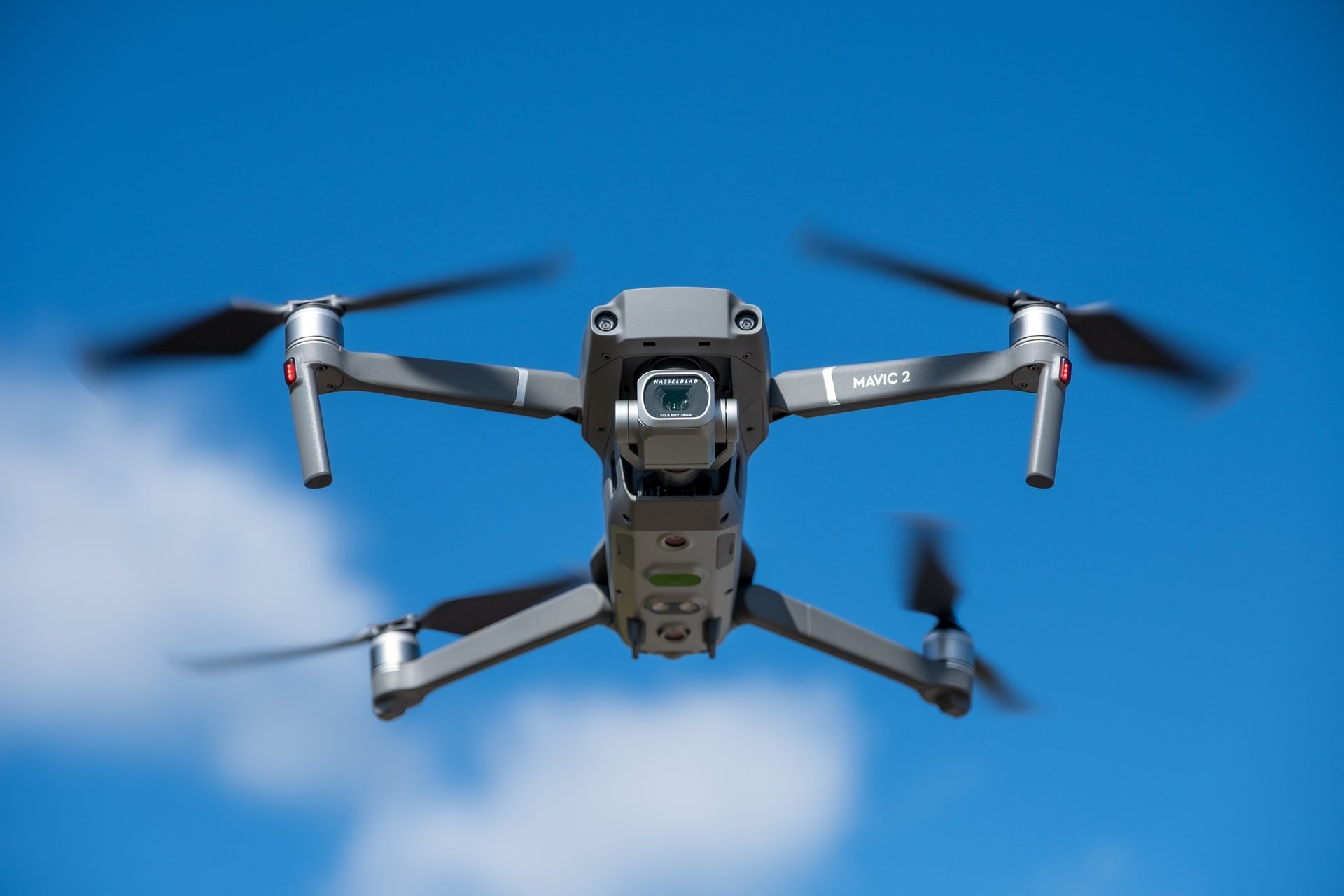
These drones are good for camera mounting and light payloads. As a result, they are unsuitable for large-scale aerial mapping because of their limited endurance and speed. More power is required to keep the rotors spinning as they need to oppose gravity because they are lightweight. Multi-rotor drones are restricted to electric motors because the other types are not able to provide power to all the rotors. Out of all the types of drones, the multi-rotor is the cheapest with a price range of $5 to $65K USD. The Quad-copter is the most popular multi-rotor consumer drone. It has four propellers where two spin in one direction and the other two turn in the opposite direction.
Fixed-Wing drone
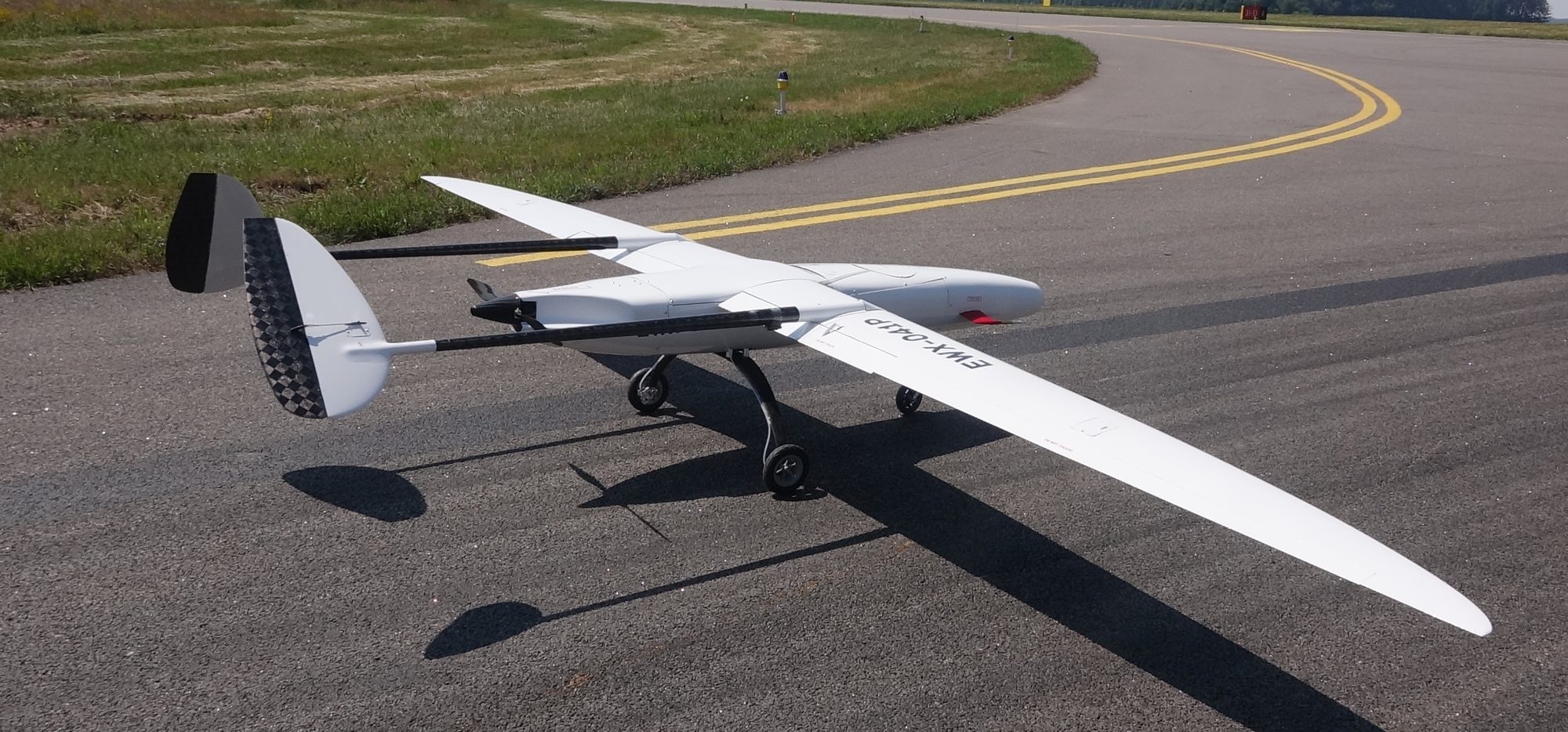
These drones are good for camera mounting because the drone's frame cannot obstruct image capturing. The fixed-wing drone cannot hover in one spot and requires a runway for landing and take-off. Hovering is the drone's ability to remain in one position while airborne. They use wings similar to an airplane which is why they can only move forward. Despite these limitations, fixed-winged drones have the ability to cover longer distances. The cost lies in between multi-rotor and single rotors with a price range of $25 to $120K USD.
Where UAVs Are Used
Drones have proven to be an effective and efficient means of transportation with a lot of potential developments for the future. Unmanned Aerial Vehicles (UAVs) are becoming useful in ever-increasing areas of life.
1. Aerial Photography
Drones make photographers capable of snapping shots in great focus compared to image capture on foot or in any other vehicle. Aerial photography is a big field with a lot of spin-offs and niche areas. It is also the basis of the civil UAV industry and the entry point for most drone pilots.
2. Film and TV Footage
Film and television companies can take advantage of drone technology. These companies tend to have larger budgets for new equipment and the latest gadgets. The footage and shots achievable from drones carrying broadcast-grade cameras give companies in the industry more incentive to invest in the technology.
3. Aerial Mapping
Drones that are equipped for mapping and programmed to fly in grid patterns are building up a detailed picture of the earth in ways that traditional maps could not.
4. Hobbyists
Consumer drones are widely available to purchase in many technology shops where general people can get them for their recreational use.
5. Farming
Farmers can use drones for the inexpensive monitoring of crops. Farm managers can see aerial photographs of different parts of land that requires different levels of cultivation and agriculture.
6. Real Estate Realtors
Estate agents have been quick to take up drone filming to help promote and sell homes. Drones can capture pictures that showcase the entire landscape instead of snapshots of small areas of real estate property.
7. Law enforcement
The police service has made good use of drone technology for improving its services. A drone can be launched to film or photograph the scene of a car accident or crime. This comes with some advantages such as the significant savings in time spent on site by police officers. In addition, the delays caused by motorists would be completely removed. Besides the police force, search and rescue teams can also benefit majorly from drone use. They can send a drone to analyze environments that pose a potential danger, such as over an ocean or a fire.
8. Drone Deliveries
The last use-case is the delivery of goods. Although this is still a concept, in the future, it will not be uncommon to see drones replacing jobs such as postal services and package delivery to people's homes. The advantage is the speed at which a drone can get to a different location and the cost savings that come from replacing petrol and diesel vehicles.
Drones or UAVs are just one form of technological innovation that we can be proud of. They are a benchmark of human industrialization combined with self-driving cars, spacecraft, AI, and VR amongst others. I hope you enjoyed this article and you are welcome to let me know your thoughts through this link. Here is another article I wrote about Software Engineering Compared to Previous Eras.
Make sure to follow me on all the social platforms below.